Lights
Navigation Lights
A vessel's lights indicate what kind of vessel it is and what course it is on. They must be shown between sunset and sunrise and in poor visibility. Their purpose is not to illuminate the night for the crew's own benefit, but only to make the vessel visible to others.
A distinction is made between bright and ordinary lights. Commercial vessels are required to carry bright lights. The two types differ mainly in their visibility range:
| Bright | Ordinary | |
|---|---|---|
| White | 4 km | 2 km |
| Green & Red | 3 km | 1.5 km |
The illustration below shows the usual lights and the sectors over which they shine.
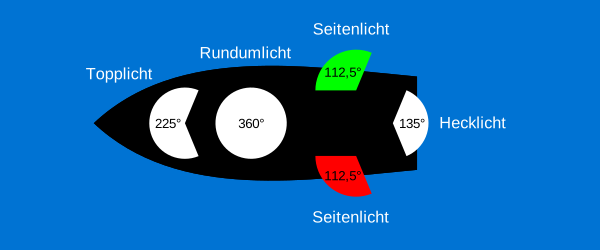
The following table shows which lights belong to which vessel.
| Vessel | Lights |
|---|---|
| Rowing, paddle, pedal boats | All-round light (white, ordinary) |
| Sailing boats under sail | All-round light (white, ordinary) |
| Sailing boats under engine | Masthead light, side lights, stern light (side lights and stern light may be combined in a tricolour lantern) |
| Motorboat & professional fisherman under 4.4 kW, fisherman tending nets | All-round light (white, ordinary) |
| Motorboat with more than 4.4 kW | Masthead light, side lights (may be combined in a bicolour lantern) |
| Commercial vessel | Masthead light (higher than side lights), side lights, stern light |
| Tow, push tow | Towing vessel: masthead light, side lights, stern light Towed vessel: all-round light |
| Police, fire, rescue services on duty | Masthead light, side lights, stern light, flashing light |
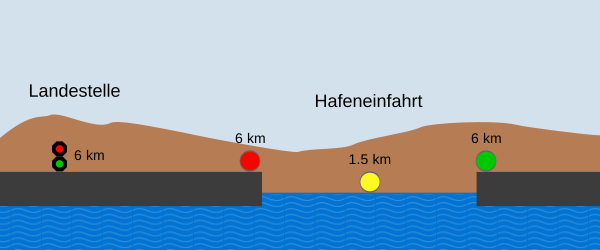
Lighting of Harbours and Landing Stages